

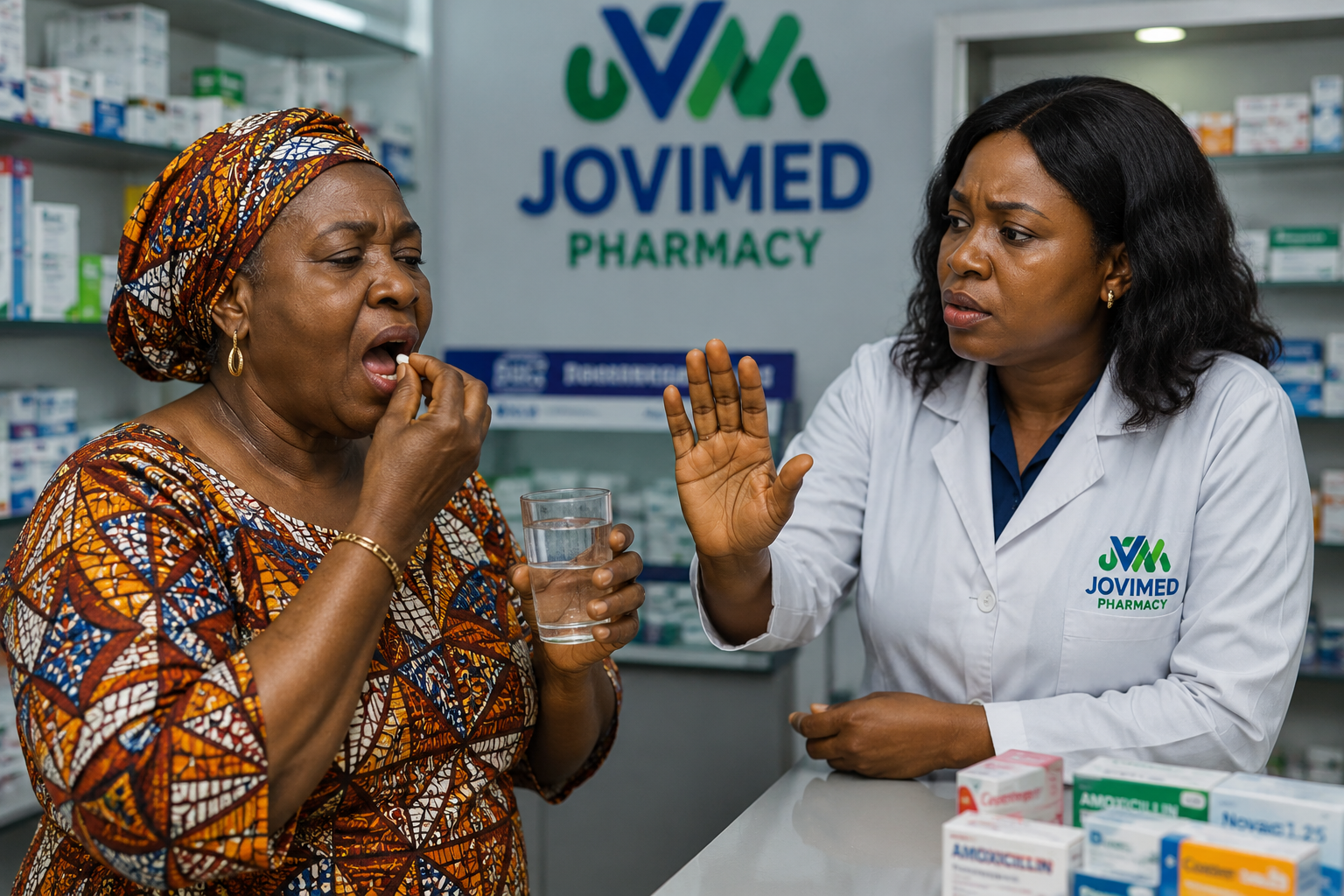
You wake up feeling sick.
Maybe you have a headache. Maybe your body feels weak. Maybe you have a fever, stomach pain or a cough.
Then you remember a medicine you used the last time you had similar symptoms.
“Let me just buy the same drug. It worked for me before.”
This is how self-medication often starts.
It may seem convenient, cheaper, and faster than visiting a doctor or speaking with a qualified healthcare professional. And while some minor conditions can be managed with appropriate over-the-counter medicines when used correctly, taking medicines based on guesswork can be risky.
The symptoms you have today may not have the same cause as the symptoms you had before. The medicine that was appropriate for one person may also be inappropriate for another.
That is why knowing when to seek professional advice matters.
What is self-medication?
Self-medication generally means treating yourself with medicines without appropriate professional advice or prescription.
It can include using someone else’s prescription, taking leftover medicines from a previous illness, changing the dose yourself, buying prescription medicines without proper assessment, or taking antibiotics because you think your symptoms look like an infection
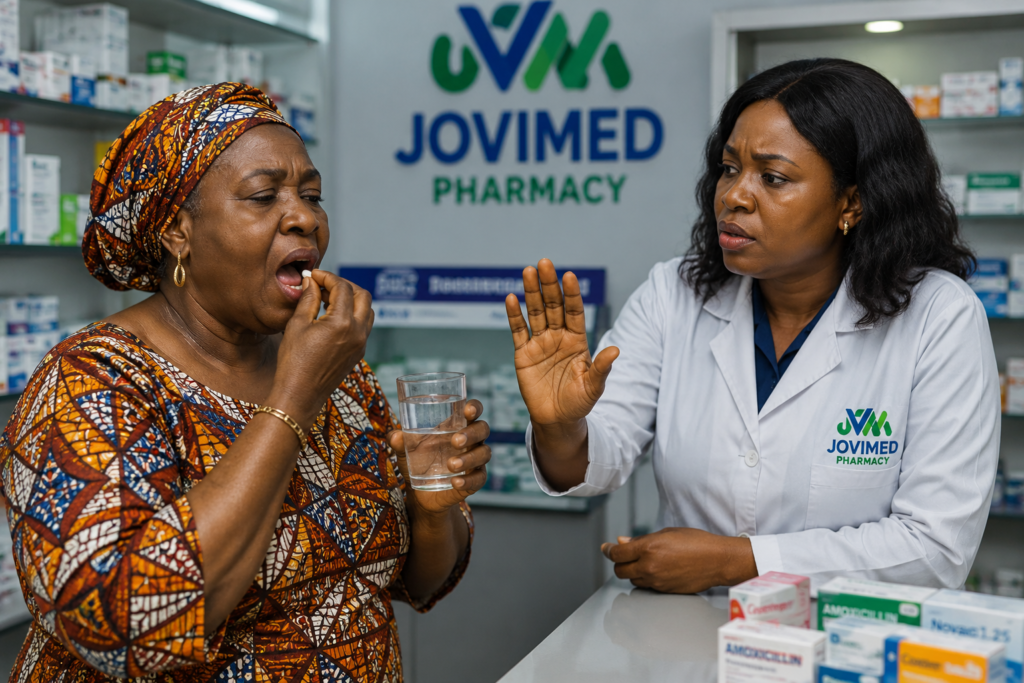
WHO identifies inappropriate self-medication, particularly with prescription medicines, as one form of irrational medicine use. It can expose people to avoidable risks and may delay proper diagnosis and treatment.
Why is self-medication dangerous?
1. You may be treating the wrong problem
One of the biggest dangers is assuming that a symptom automatically tells you what disease you have.
Fever does not always mean malaria.
A headache does not necessarily mean you need the same medicine you used the last time.
A cough can have different causes.
When you treat only the symptom without understanding the cause, you may temporarily feel better while the underlying condition remains untreated.
WHO notes that inappropriate self-medication can contribute to delayed diagnosis.
This is particularly important with illnesses where testing or professional assessment is necessary.
2. The wrong dose can cause problems
More medicine does not mean faster recovery.
Taking too little may make treatment ineffective, while taking too much can increase the risk of adverse effects.
Your appropriate dose may depend on factors such as the medicine involved, your age, other medicines you take and your health circumstances.
WHO identifies incorrect dosage as one of the ways medicines can cause harm.
That is why you should not increase a dose simply because you feel the medicine is not working quickly enough.
3. Medicines can interact with other medicines
Another common mistake is looking at each medicine separately.
You may take one medicine for pain, another for fever and another medicine you already use regularly, without realizing that they may interact.
WHO notes that interactions can occur between medicines and even with some foods or traditional medicines.
This is one reason it is important to tell your doctor or pharmacist about other medicines, supplements or traditional remedies you are taking.
4. You may have an allergic reaction
A medicine that was safe for someone else may not be safe for you.
Some people can have allergic reactions or other adverse effects to medicines they have never used before.
WHO lists undetected allergic conditions and other patient-specific factors among potential causes of medication-related harm.
If you have ever had a reaction to a medicine, make sure a healthcare professional knows about it before you use that medicine again.
5. Antibiotics are not medicines for every fever
This is one of the biggest problems with self-medication.
Someone develops a fever, sore throat or cough and immediately asks for an antibiotic.
But antibiotics do not treat viral infections such as colds and flu. Using them when they are not needed does not make the illness go away faster.
The Nigeria Centre for Disease Control and Prevention has repeatedly warned that inappropriate antibiotic use and self-medication contribute to antimicrobial resistance. NCDC advises Nigerians to use antibiotics only when prescribed by a qualified healthcare professional.
Antimicrobial resistance is serious because medicines that once worked against certain infections may become less effective, making some infections harder and more expensive to treat.
There is also another important point:
Do not keep leftover antibiotics for the next illness.
NCDC advises against sharing or using leftover antibiotics and recommends completing antibiotics as prescribed.
6. Self-medication can hide symptoms
Sometimes a medicine reduces a symptom without addressing what caused it.
That can create a false sense that everything is fine.
You feel better, stop paying attention to the problem and continue with your normal routine.
Meanwhile, the actual illness may still need attention.
This is another reason why persistent, unusual or worsening symptoms should not simply be managed by repeatedly buying medicines on your own.
7. Previous experience does not always mean the same treatment is right today
This is one of the most common thoughts behind self-medication:
“I used this medicine last time.”
But your previous illness and your current illness may not be the same.
Your age, health condition, other medicines and the actual cause of your symptoms may also be different.
So instead of asking:
“What medicine did I use last time?”
a better question is:
“What is causing this problem, and what is the appropriate treatment?”
That shift can make a big difference.
What about over-the-counter medicines?
This is where we need some balance.
Not every use of medicine without a doctor’s prescription is automatically dangerous. Some over-the-counter medicines are specifically intended for short-term self-care when used according to their labels and appropriate guidance.
WHO recognizes that self-care with selected medicines can have a role, but emphasizes the importance of appropriate drug selection, correct directions, warnings and attention to interactions.
The problem begins when people:
- Guess the diagnosis
- Ignore the instructions
- Use the wrong dose
- Combine medicines carelessly
- Use someone else’s prescription
- Continue using a medicine longer than recommended
- Take prescription medicines without appropriate professional advice
That is no longer responsible self-care.
What should you do instead?
When you are unwell, do not automatically reach for the last medicine you used.
Take a moment to consider what is happening.
Speak with a healthcare professional
A doctor, pharmacist or other appropriate healthcare professional can help you determine whether you need a medicine, further assessment or referral.
Follow the instructions
Read the medicine label and follow the prescribed dose and duration.
Do not change the dose because you think more will work faster.
Do not share prescription medicines
A prescription is meant for the person it was prescribed for.
Even when two people have similar symptoms, their appropriate treatment may be different.
Do not use leftover antibiotics
NCDC specifically advises against using or sharing leftover antibiotics.
Seek help when symptoms persist or become worse
If your symptoms are unusual, severe, persistent or getting worse, seek appropriate medical attention instead of repeatedly trying different medicines yourself.
A simple rule to remember
Before taking a medicine, ask yourself:
Do I know what this medicine is for?
Do I know the correct dose?
Could it interact with another medicine I take?
Do I have a condition or allergy that could make it unsafe?
Do I actually know what is causing my symptoms?
If you are unsure about any of these, speak with a qualified healthcare professional before taking the medicine.
At Jovimed Pharmacy, you can ask questions
You do not have to make every medicine decision alone.
At Jovimed Pharmacy, customers can speak with the pharmacy team for appropriate guidance on medicines and can check the availability of medicines before visiting or placing an order.
📍 Headquarters: 92A Jovimed Building, Opposite B Division Police Station, Oke-Aro, Akure, Ondo State.
📍 Branch: Beside First Bank, Oke-Aro, Akure.
📞 08062641711
💬 WhatsApp: 08131803882 or 08062641711
Good Health is Affordable.
Important note
This article is for general health education and is not a substitute for diagnosis or individual medical advice. If you are seriously unwell or have concerning symptoms, seek appropriate medical care.